On May 7, 2025, Riga received the EU’s Climate-Neutral and Smart Cities Mission Label, joining 91 other European cities with approved climate-neutrality plans. According to Nika Kotoviča from the Riga Energy Agency, the label confirms the quality of Riga’s climate plan and opens access to international cooperation, funding, and expert support.
The label is now displayed at Riga City Hall. Achieving the mission goal—an 80% reduction in greenhouse gas emissions by 2030 compared to 1990—requires phasing out fossil fuels in energy, buildings, and transport, and improving waste and land-use practices. The Riga Energy Agency spent nearly three years developing the city’s emissions inventory, measures, and investment plan.
What the recognition enables:
- Funding access: New opportunities through EU funds and the European Investment Bank; first projects already underway, including with “Rīgas Meži.”
- Innovation support: Eligibility for Horizon Europe programs and pilot projects.
- International visibility: Stronger positioning as a climate-smart city.
What does Riga’s climate-neutrality plan entail?
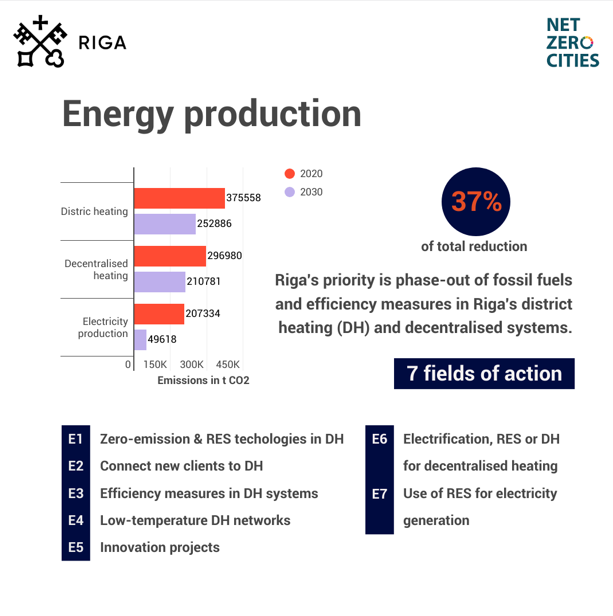
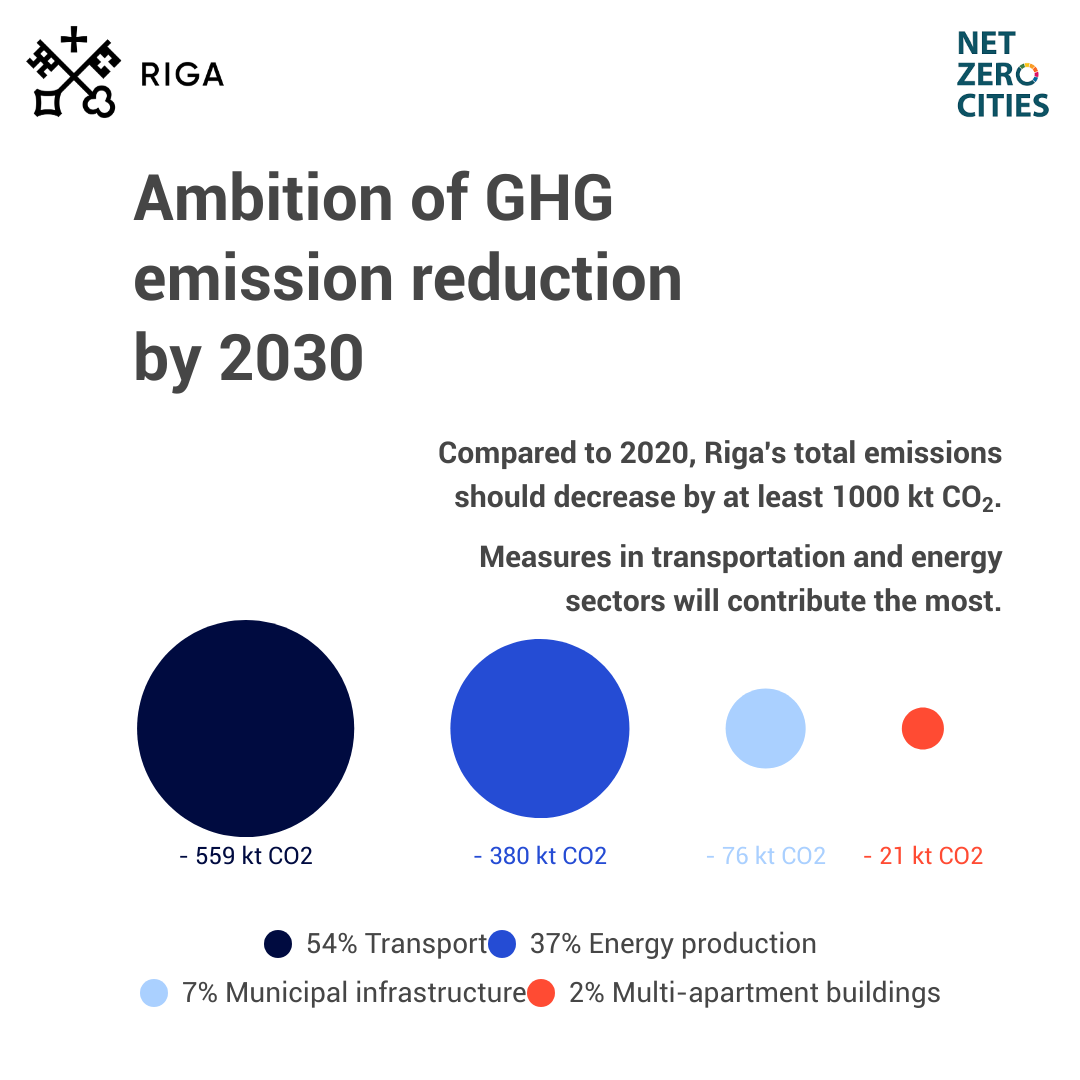
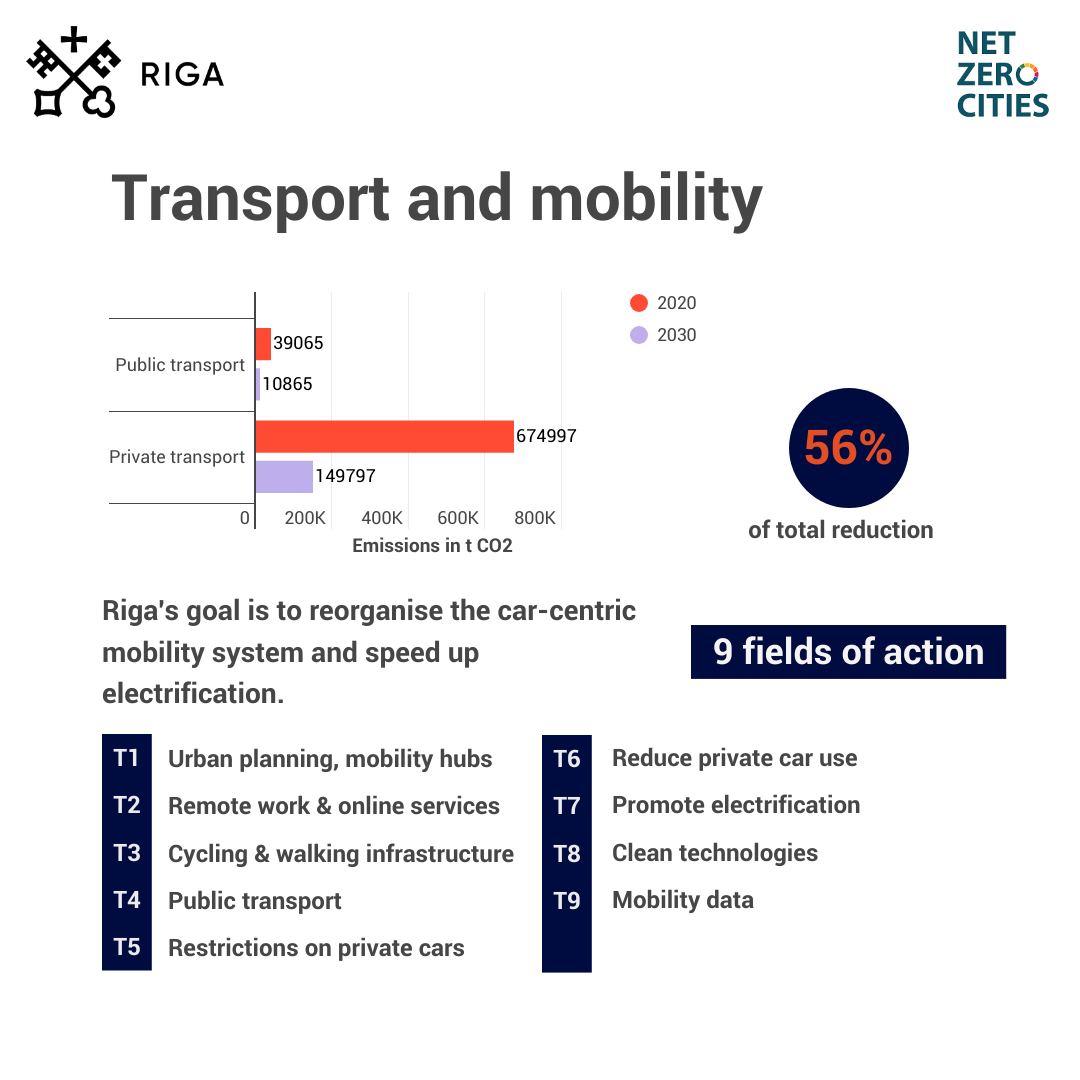
Riga has already cut emissions by 62% since 1990. Between 2019 and 2030, at least one million tons of CO₂e must still be reduced. Main sectors and their planned contributions:
- Transport (54%) – major investments in public transport, cycling, EV charging, and pedestrian infrastructure.
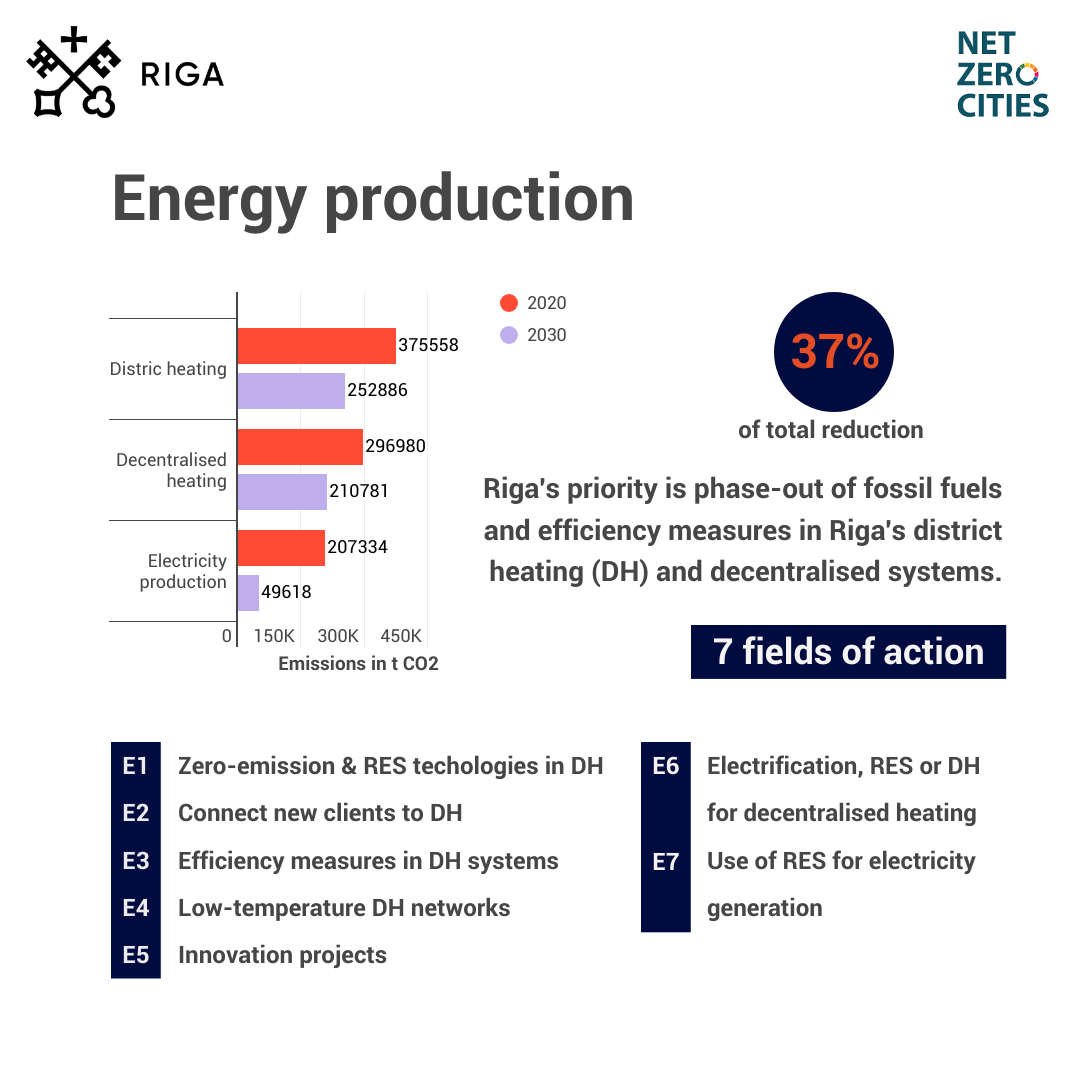
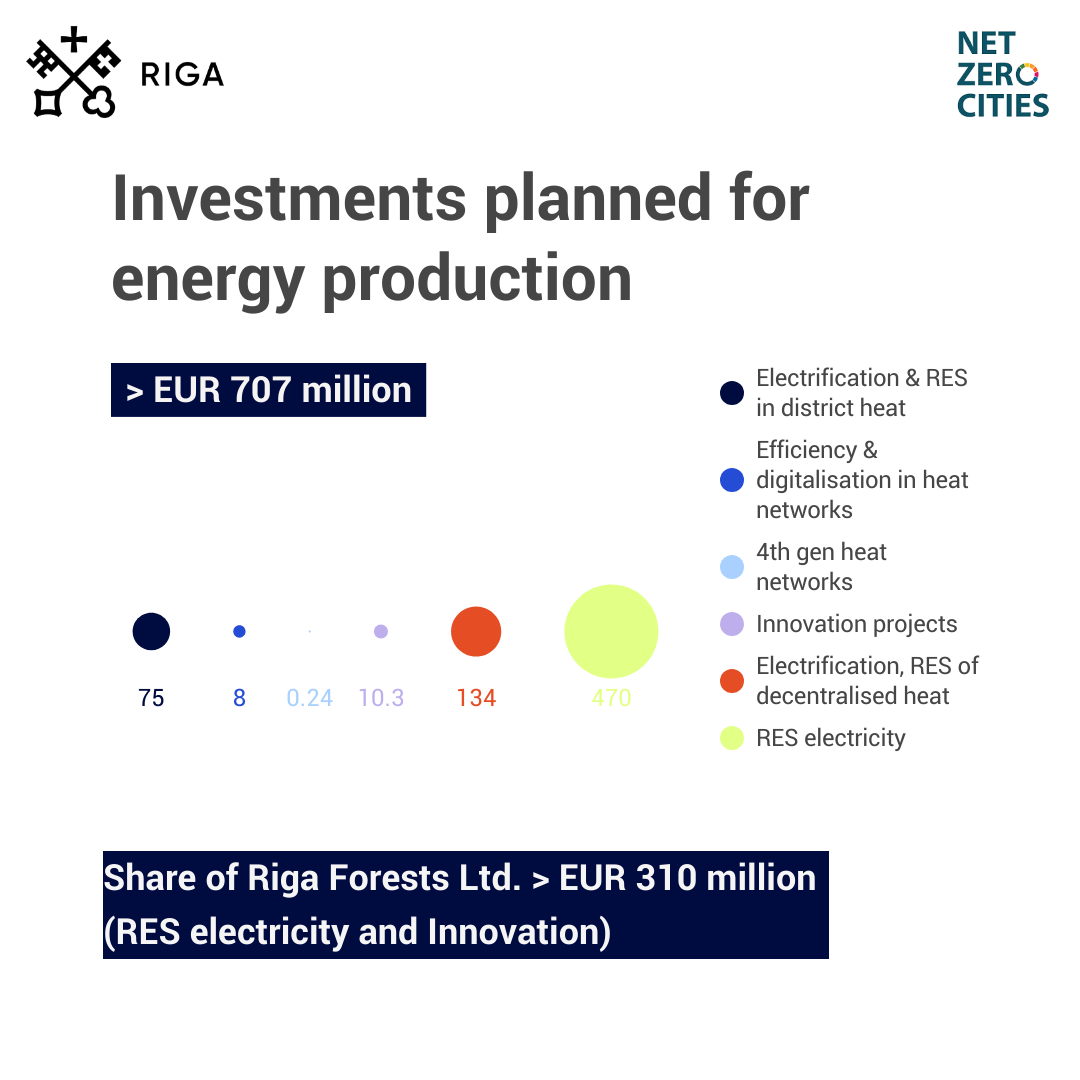
- Energy production (37%) – replacing gas-based systems, electrification, and efficiency measures.
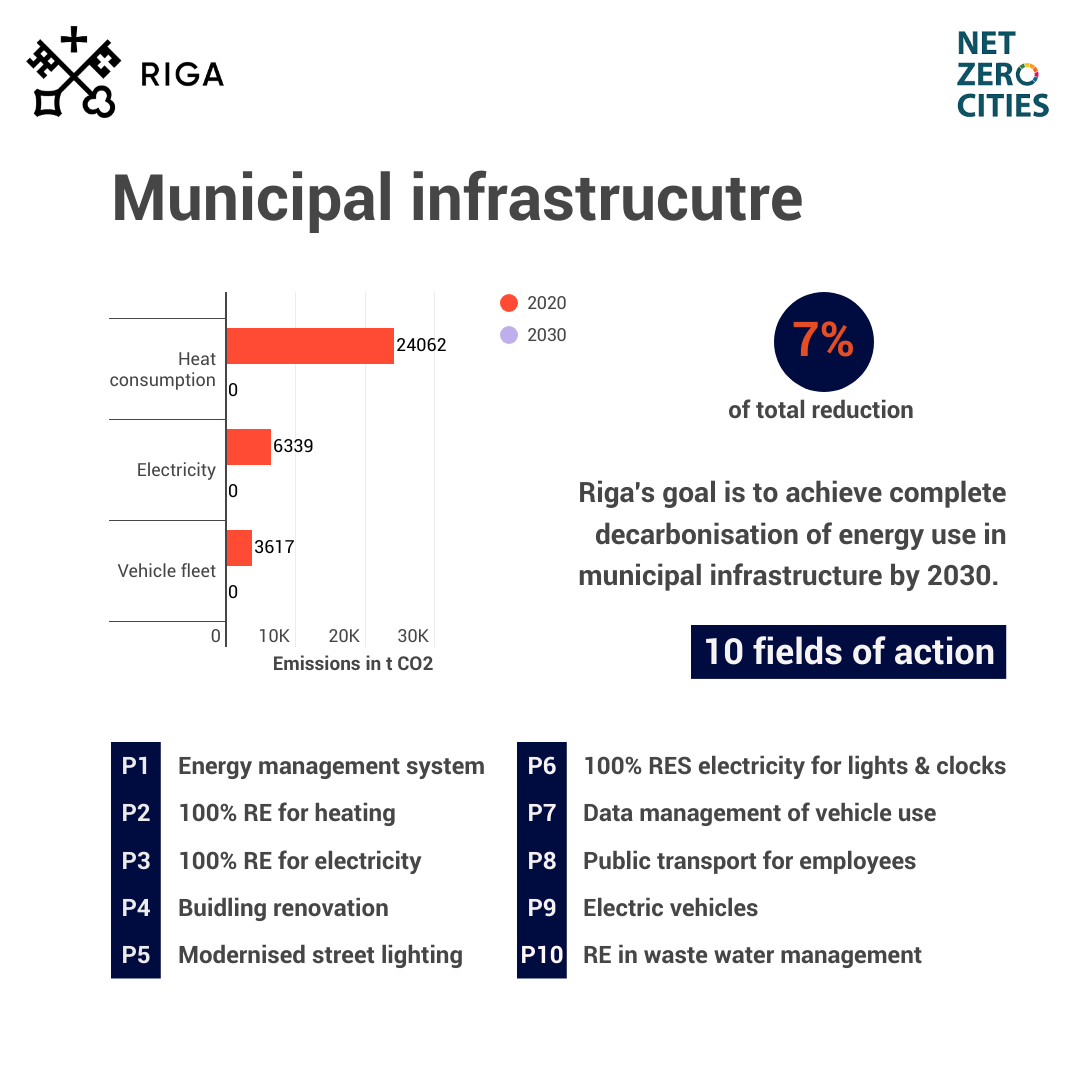
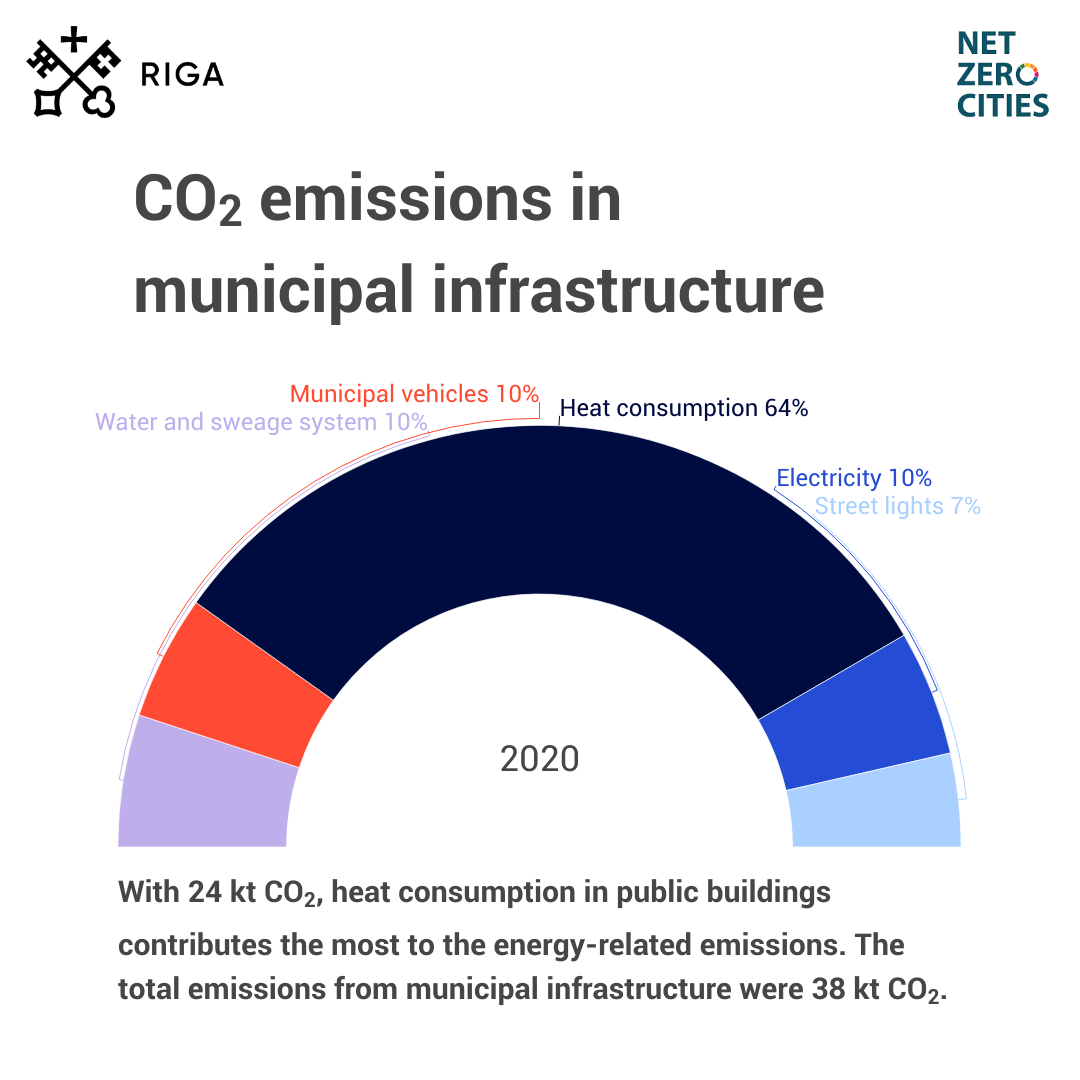
- Municipal infrastructure (7%) – renovating public buildings, switching to renewables, low-emission fleets, efficient street lighting.
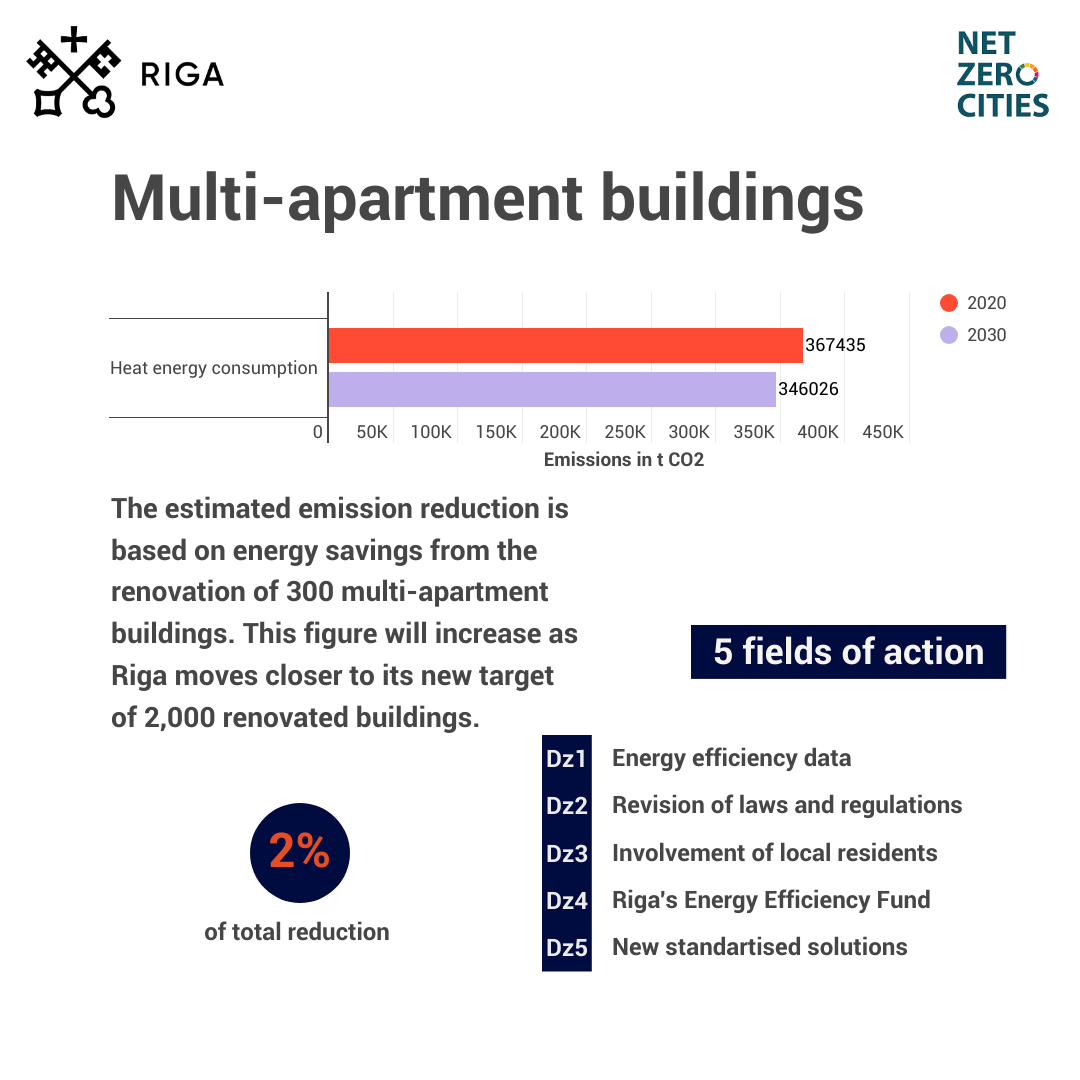
- Multi-apartment housing (2%+) – building renovation and energy efficiency.
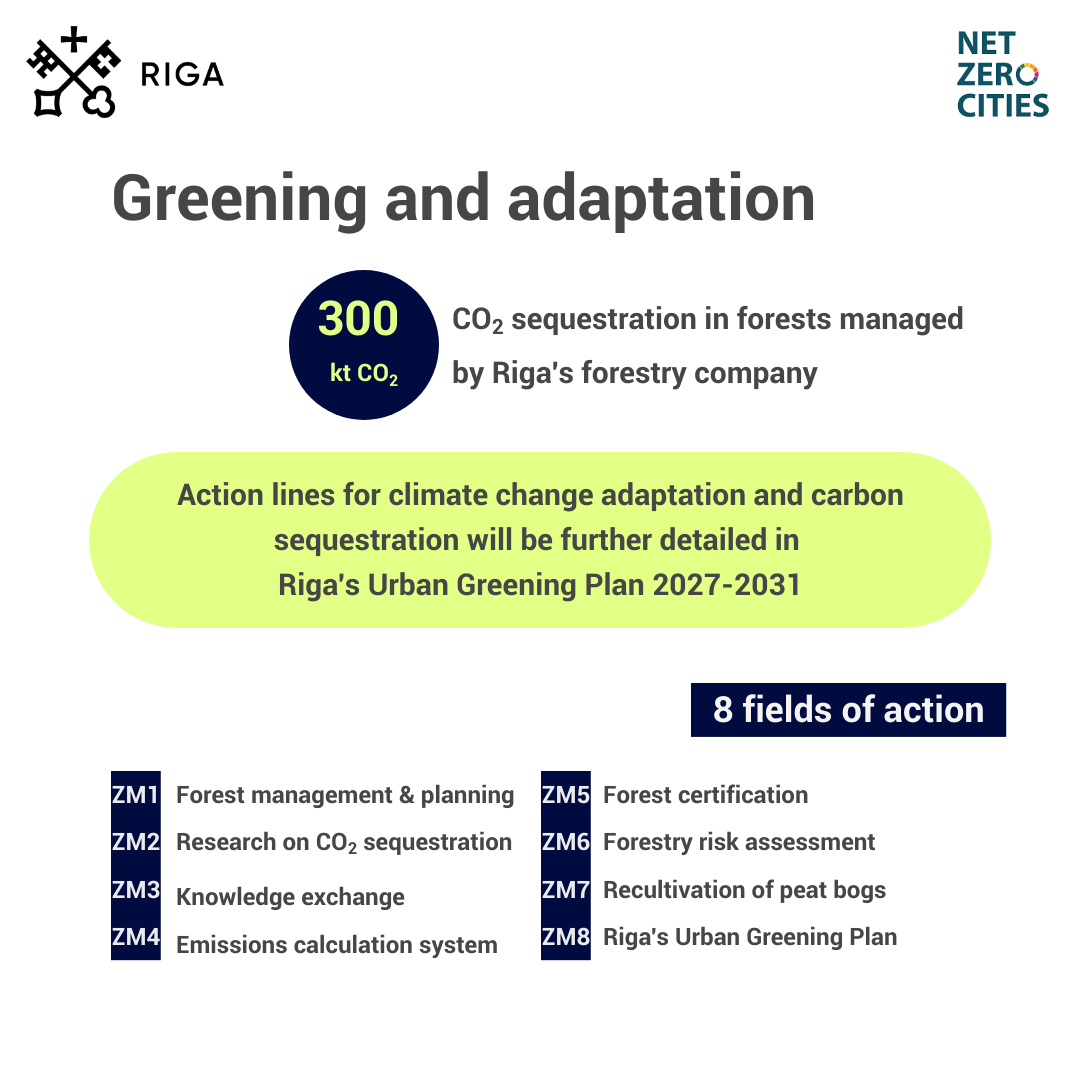
Total estimated investment: EUR 2.8 billion. Riga will also maintain 300 kt CO₂e of carbon sequestration in municipal forests.
What are the next steps?
Riga’s Action and Investment Plans will be updated every two years. Many initiatives are already in progress, including an energy management system that reinvests savings into efficiency projects. Challenges remain—especially a funding gap of over EUR 1 billion and the need for strong coordination and political commitment.
Despite this, Riga aims to accelerate progress in clean mobility, urban greening, and building renovation, strengthening its position as a leading Baltic metropolis and contributing to Latvia’s national climate goals.





Author and Picture credits: Riga Municipality