Bringing Europe’s Positive Energy District Journey Together
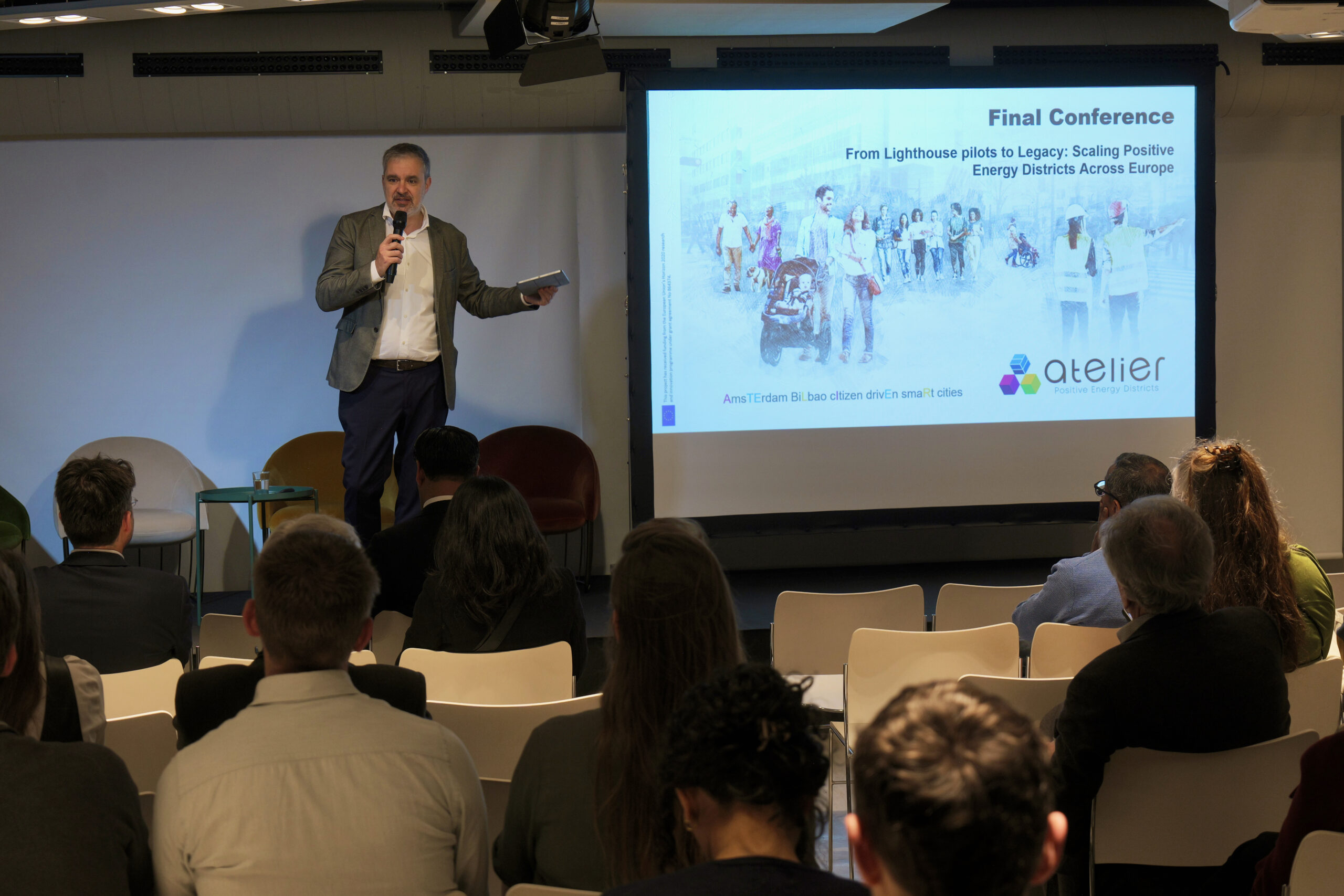
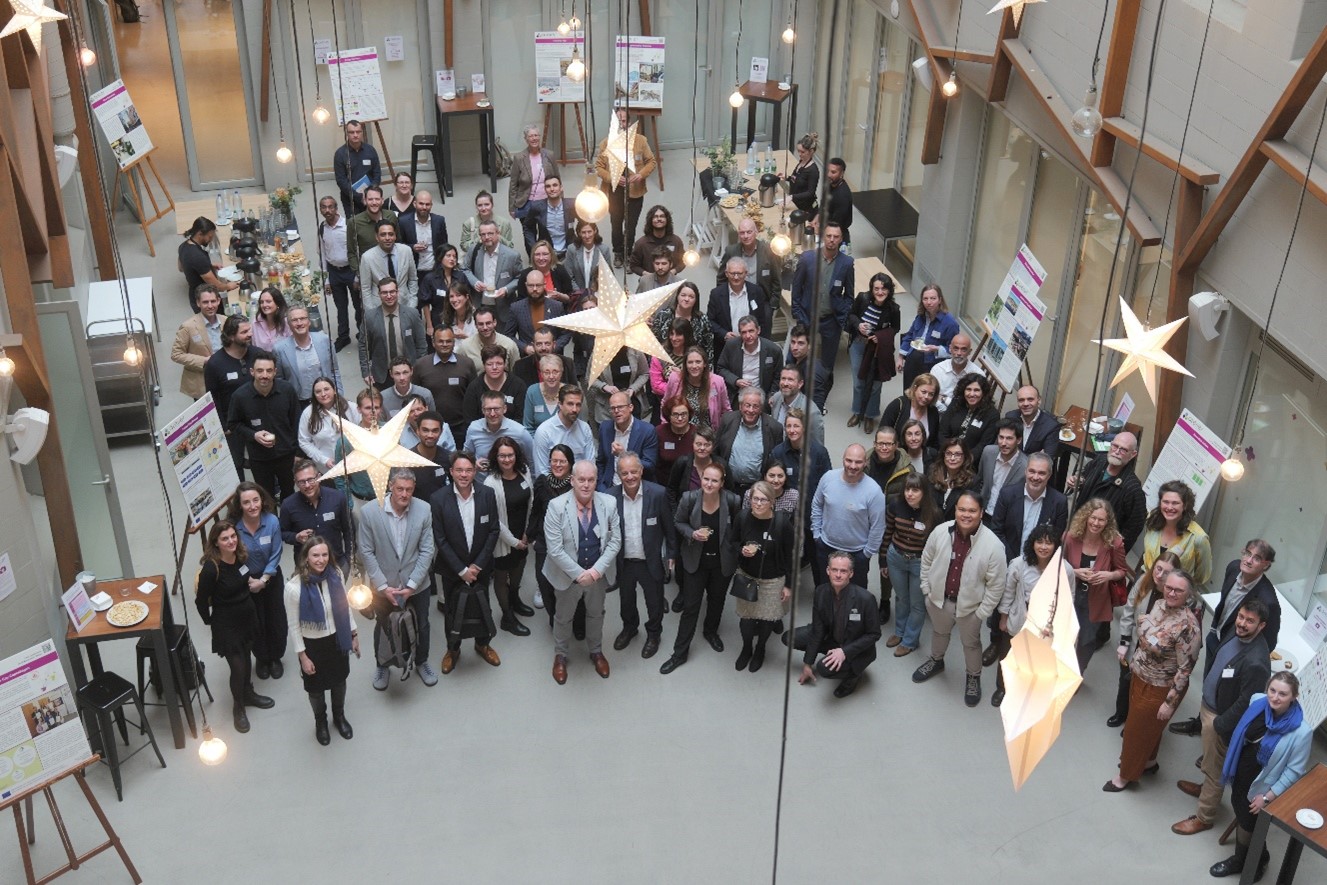
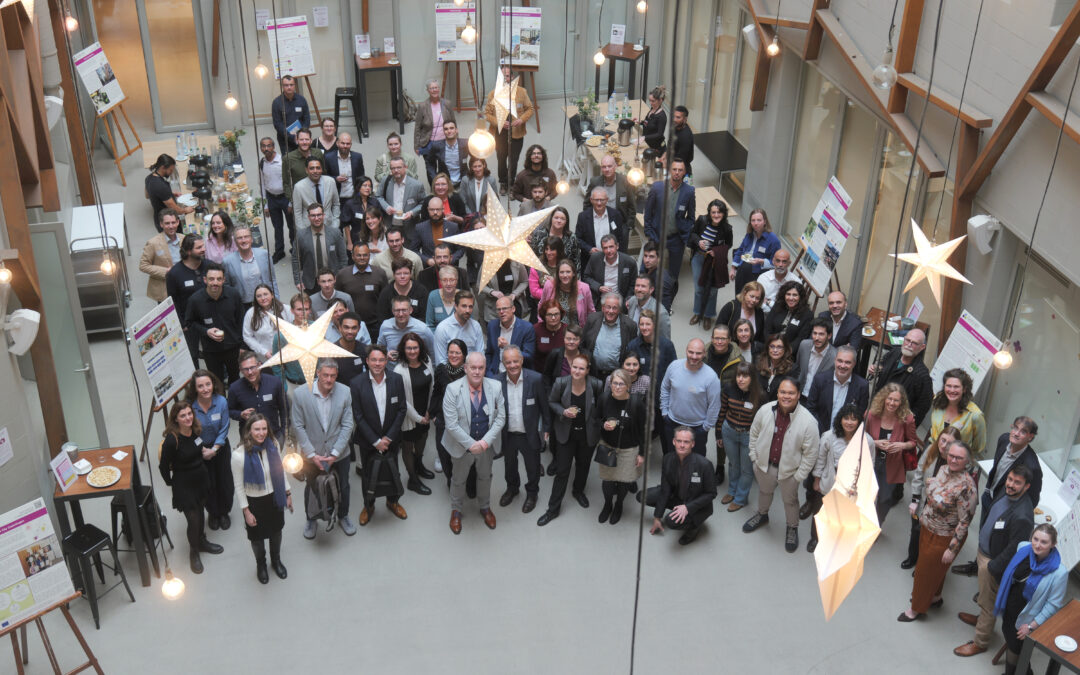
In March 2026, the ATELIER project reached an important milestone with its Final Conference in Bilbao. After more than six years of collaborative work across Europe, the conference offered a chance to look back at what had been achieved and to consider what comes next. Over two days, more than 100 project partners, city representatives, sister projects and experts met to reflect on how the idea of Positive Energy Districts (PEDs) can be turned into reality and how the experience gained through ATELIER can continue to support cities beyond the project’s lifetime.
The conference thus marked the culmination of ATELIER’s journey, from early ambitions and pilot concepts to on the ground implementation, tested governance approaches and concrete replication pathways. Hosted in one of ATELIER’s Lighthouse Cities, Bilbao, the event reflected the project’s central message: Europe’s energy transition takes shape in cities, driven by cooperation, experimentation and shared learning. “Positive Energy Districts are not built in isolation. They grow through collaboration, trust and learning across cities and disciplines,” says Frans Verspeek, project coordinator of ATELIER.
A Space for Reflection, Exchange and Storytelling
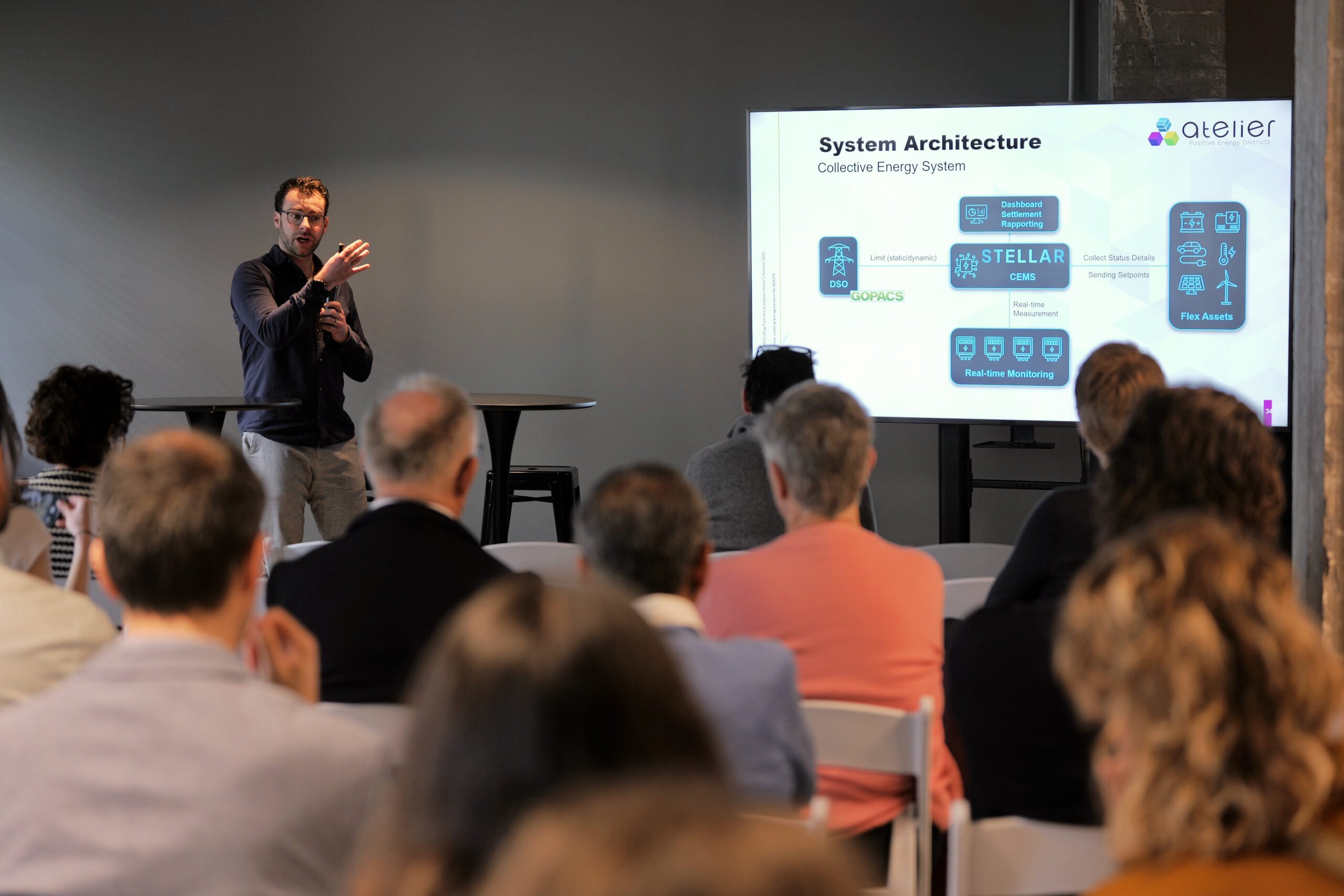
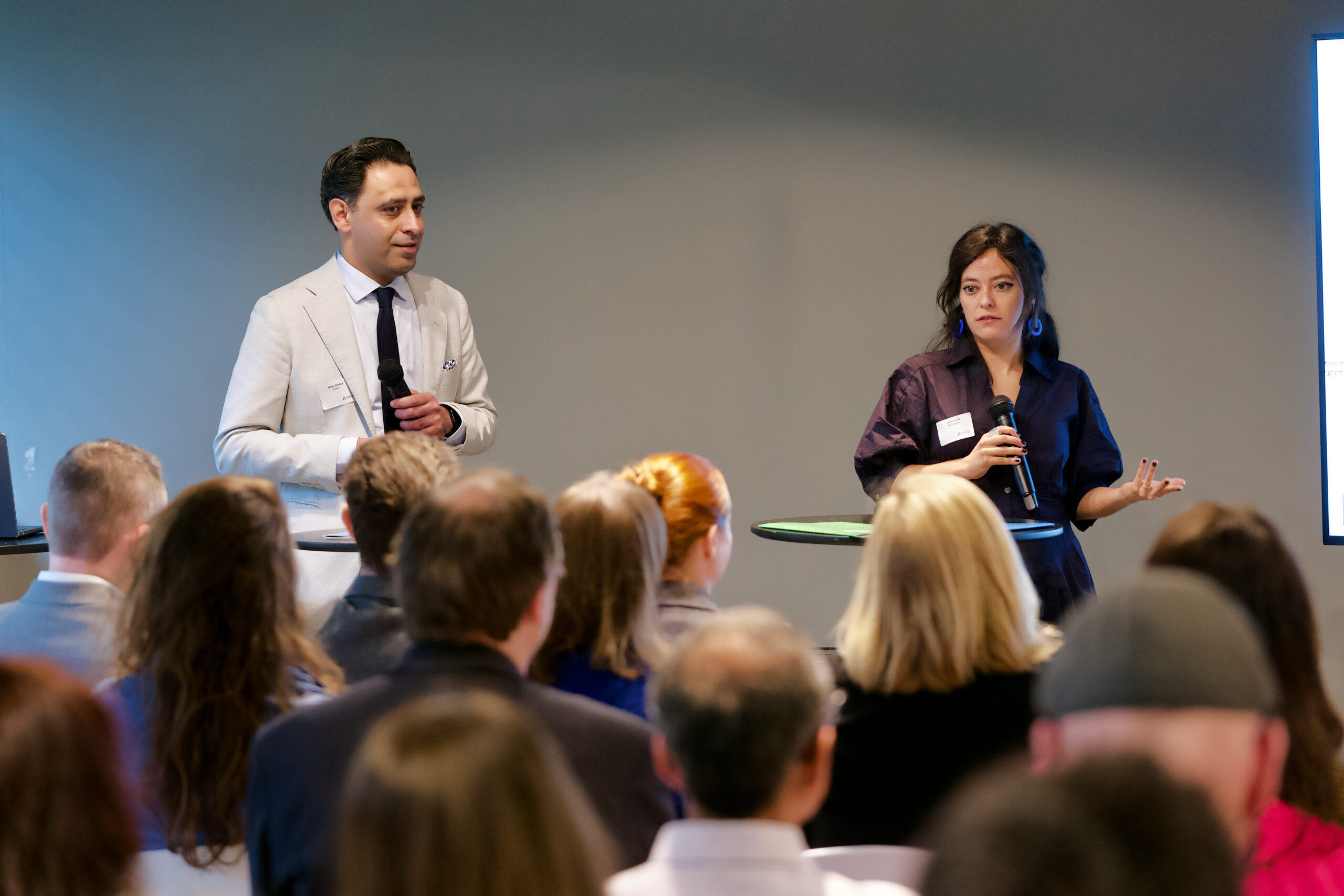
The conference programme was intentionally designed to encourage reflection rather than too much technical detail. Instead of focusing on individual technologies, the conference put the city’s stories at the heart: what was planned, what was achieved and what would cities approach differently now with the benefit of experience. In plenary sessions, all ATELIER cities shared their individual journeys and showed how local context shaped their approaches to developing and replicating PEDs.
These exchanges underlined that there is no single blueprint for a PED: each city worked within its own regulatory framework, stakeholder environment and technical starting point. At the same time, clear common themes emerged, such as the importance of strong local governance, early and continuous stakeholder involvement and the ability to adapt plans as projects move from concept to implementation.
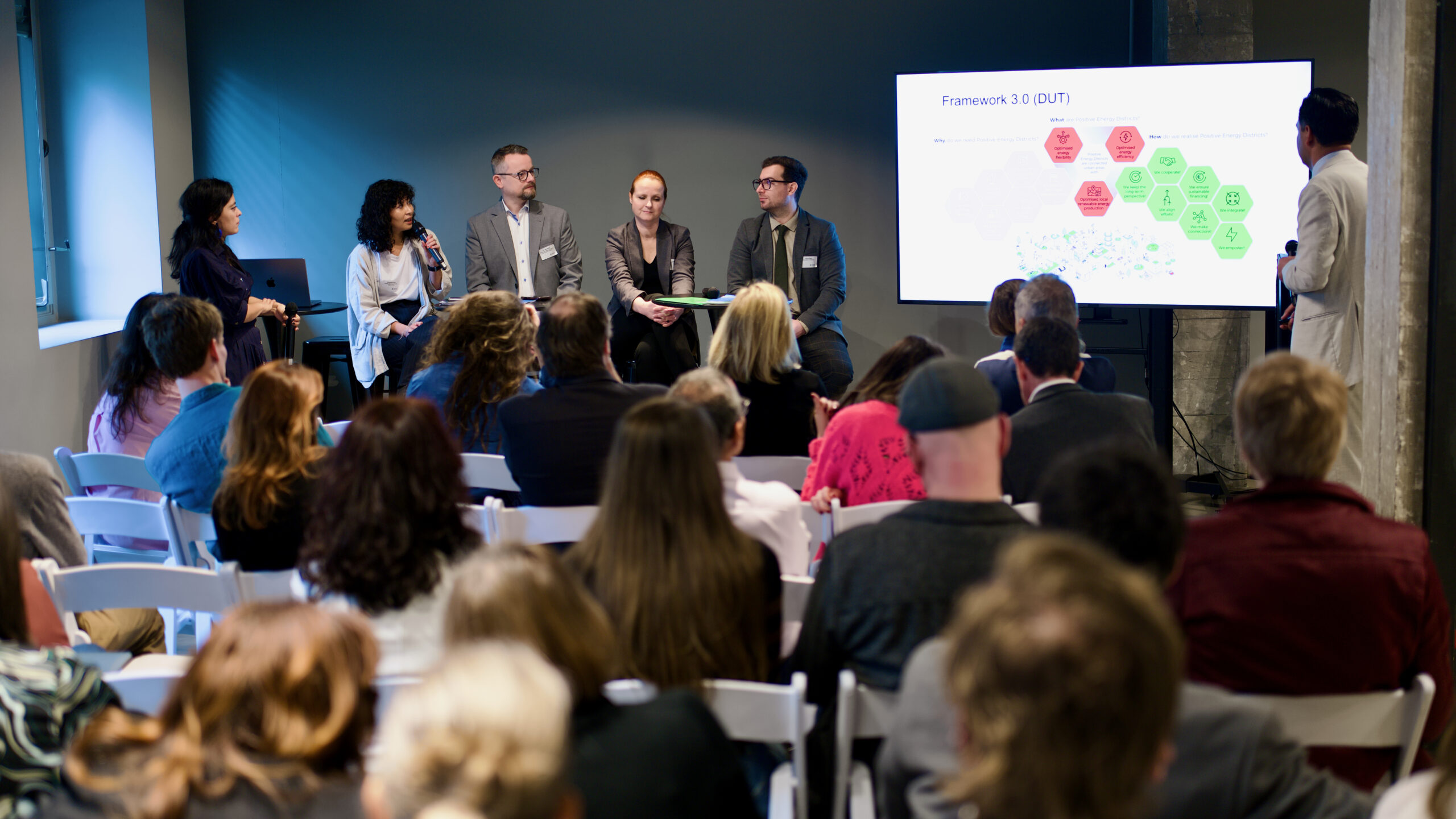
Additionally, several interactive breakout sessions allowed for more detailed discussion. Participants explored practical questions, including how to get a PED initiative started, how energy communities can strengthen local ownership, how data and digital tools support better decisions, and how financing and policy conditions shape what can realistically be achieved. These conversations reinforced a central lesson from ATELIER: PEDs are as much about people, processes and cooperation as they are about technology.
Key Learnings from Six Years of ATELIER
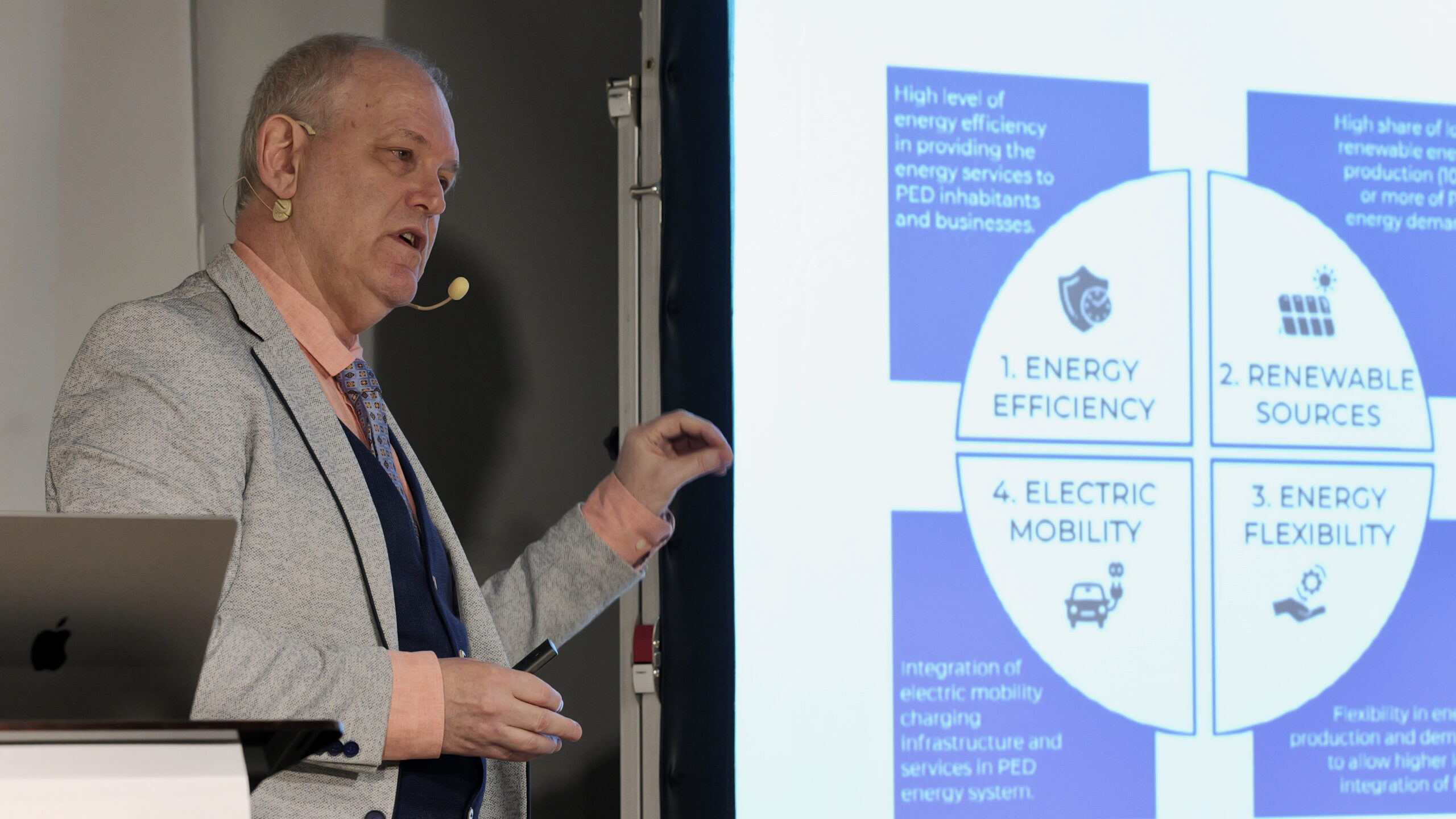
Across the sessions, several key learnings stood out. First, the conference confirmed that PEDs are indeed achievable, but only when cities take a holistic view. Technical solutions alone are not sufficient. Successful PEDs depend on integrated planning across energy, mobility, buildings and digital systems, supported by clear governance structures and sustained political commitment.
Second, citizen engagement proved to be a decisive factor. Many city representatives stressed that involving local stakeholders early and maintaining dialogue over time builds trust, increases acceptance and often leads to better outcomes. While this work can be demanding, ATELIER’s experience showed that it is essential for creating districts that are not only energy positive, but also socially inclusive and resilient.
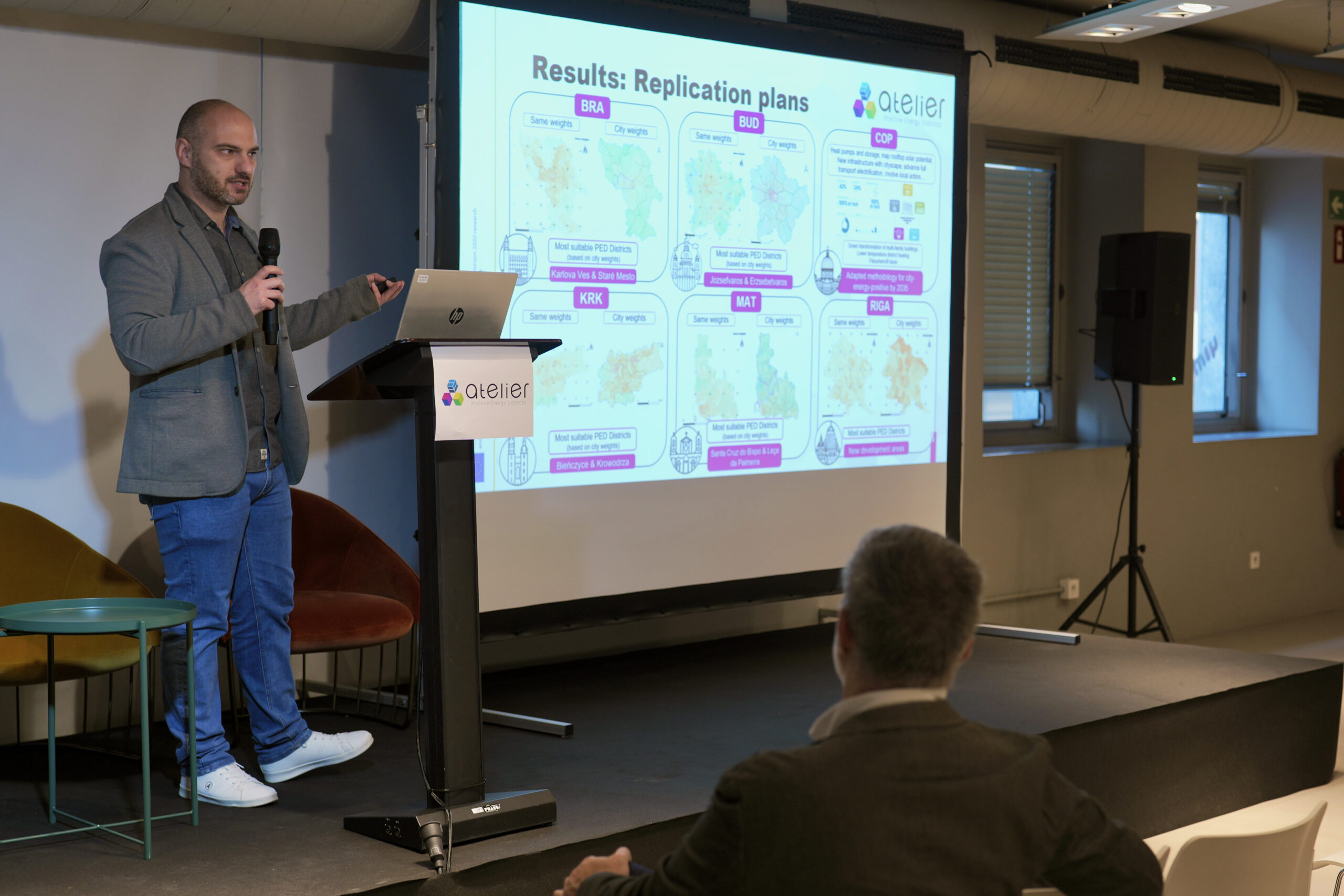
Third, the conference highlighted that replication works when it is adapted rather than copied. The Fellow Cities illustrated how ideas developed in the Lighthouse Cities can inspire action elsewhere, while still needing to be adjusted to local conditions. ATELIER’s replication framework helped cities understand which elements could be transferred directly and where local solutions were required. This balance between learning from others and responding to local realities was a recurring theme throughout the event.
From Conference Outcomes to Project Legacy
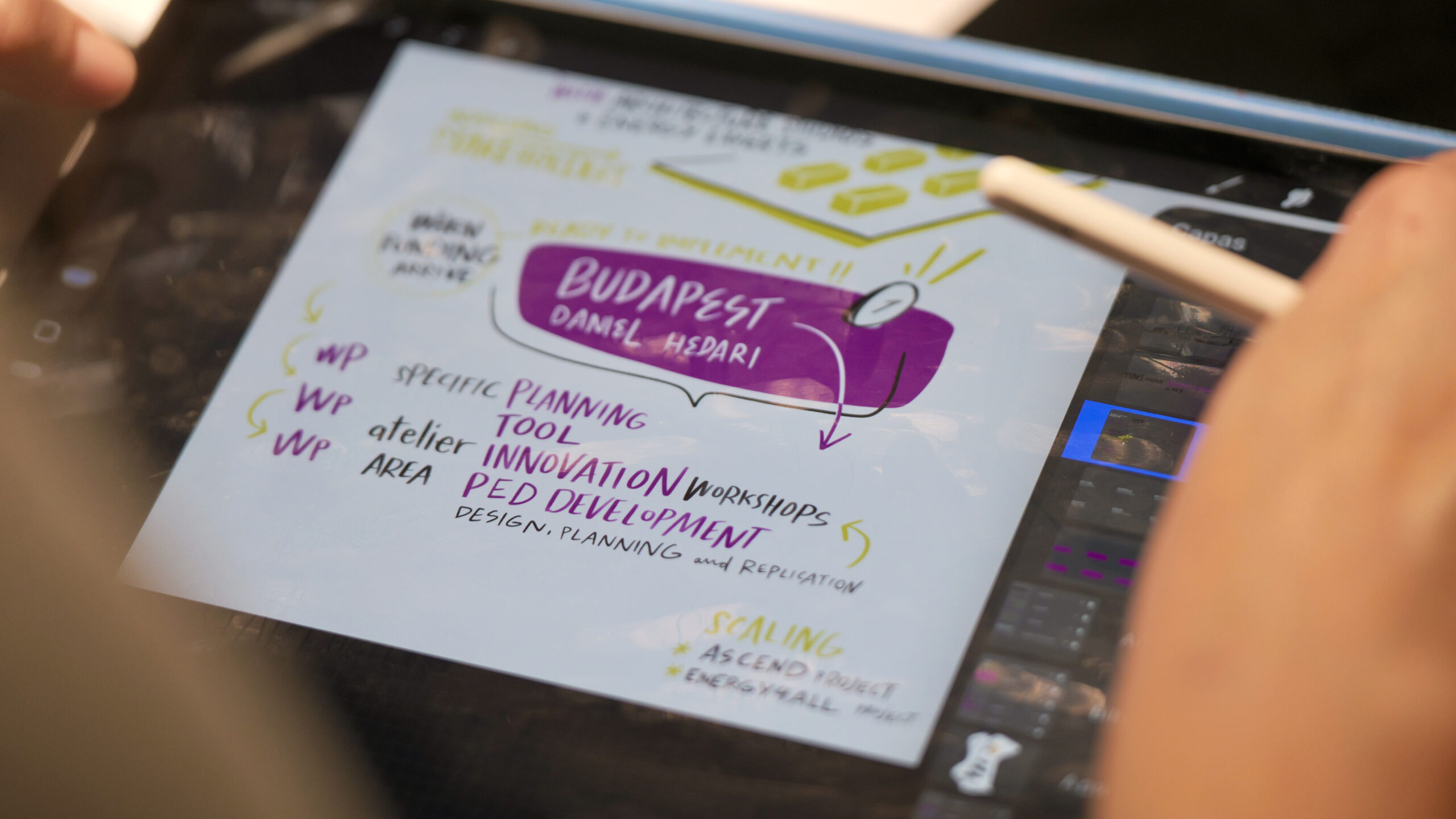
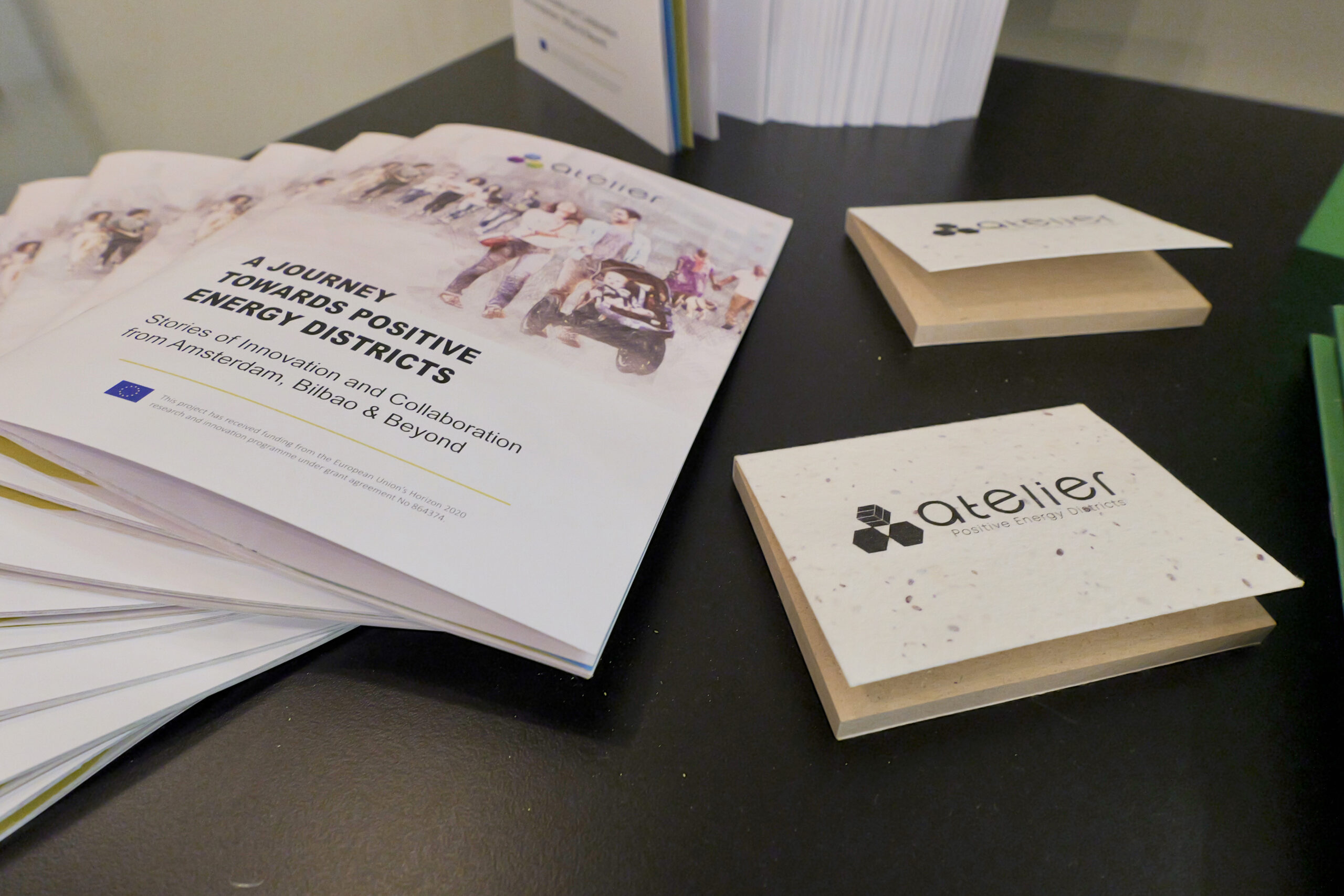
Insights from plenary discussions and breakout sessions were captured in a set of graphical illustrations as well as presentation slides, bringing together practical recommendations on governance, stakeholder engagement, data use, financing and replication strategies for PEDs. These outcomes build on the wider set of tools, frameworks and guidance developed throughout the ATELIER project and are available via the project’s website.
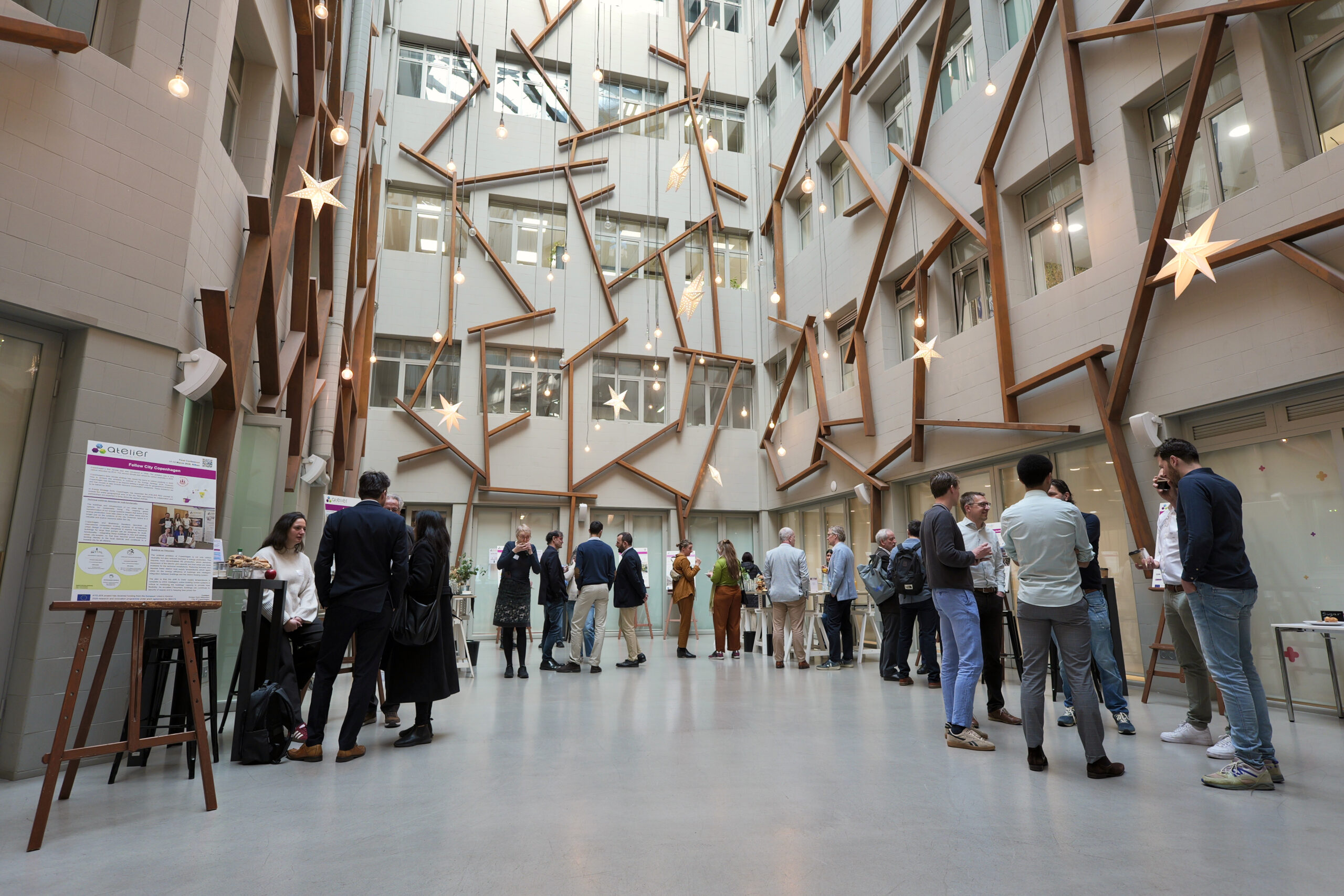
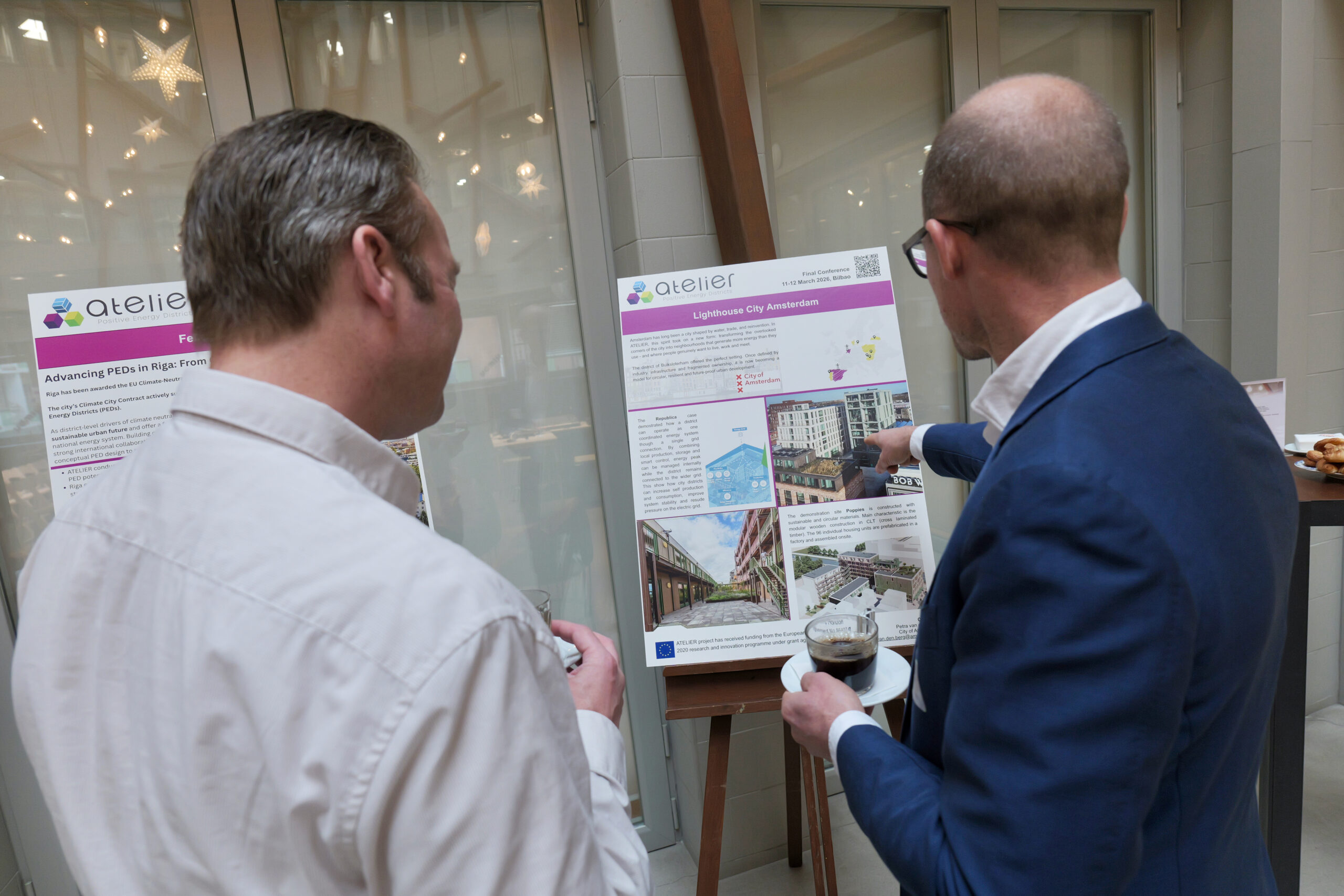
The conference also featured a dedicated poster exhibition, which presented key project results, city journeys and thematic insights in a clear and accessible way – including more technical details for the interested reader. The poster exhibition further highlighted one of ATELIER’s strengths: making complex experiences understandable and useful for other cities that are beginning or advancing their own PED initiatives.
Importantly, the Final Conference was not framed as an endpoint. Many discussions looked ahead and focused on how cities can continue their PED work, how European initiatives can better align their efforts and how knowledge generated within ATELIER can inform policy and practice at European level.
Closing ATELIER and Looking Ahead
The conference made it clear that ATELIER has helped to form a strong European community working together towards climate neutral and energy positive urban districts. It was thus both a moment of reflection and a prompt for future action, pointing to the work that still lies ahead. The urban energy transition is a long term process, but ATELIER has demonstrated that with ambition, cooperation and a willingness to learn, Positive Energy Districts can move from vision to practice.
For cities across Europe, the message from Bilbao is straightforward: there is no need to start from scratch. ATELIER leaves behind a strong body of experience, insights and practical tools that can support the next generation of PED initiatives and help translate Europe’s climate goals into everyday urban reality.
Check out more information below!