Urban areas are under growing pressure to speed up transitions in fields such as energy, mobility and circular development. Yet complex urban innovation projects often struggle with fragmented governance, unclear roles, financial constraints and misaligned stakeholders. While pilot projects may succeed in the short term, collaboration structures frequently dissolve once funding ends, limiting lasting impact.
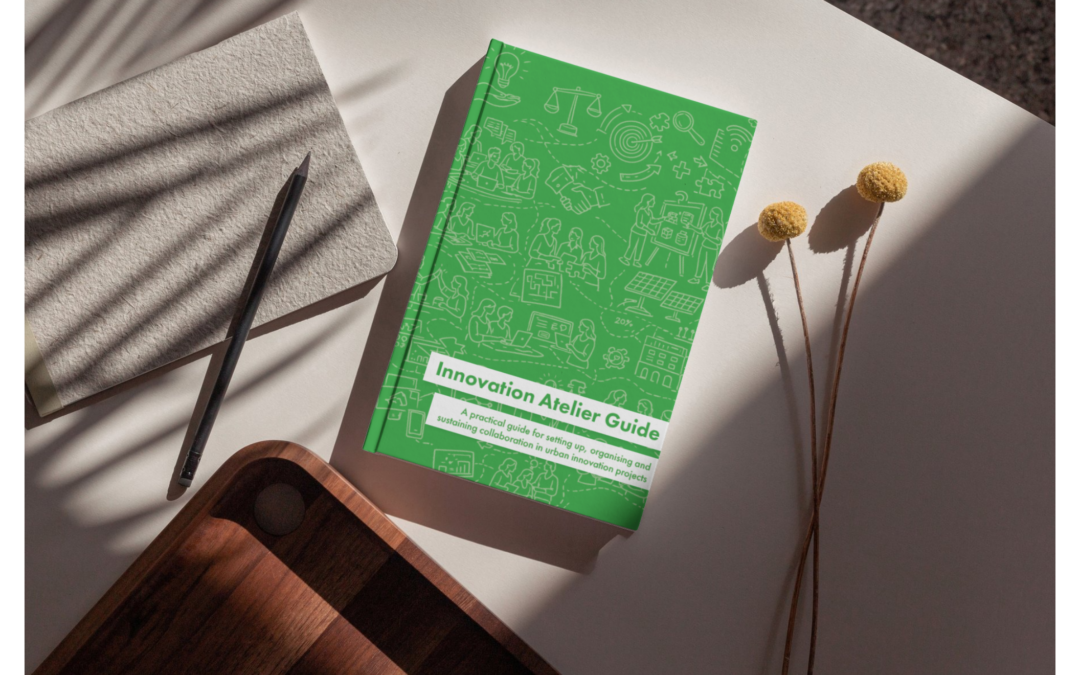
This handbook presents Innovation Ateliers as a practical approach to organising long-term collaboration in such contexts. Developed and tested within ATELIER, Innovation Ateliers are structured collaboration mechanisms that bring together municipalities, companies, knowledge institutions and citizens around shared urban innovation goals. They are designed not as temporary project platforms, but as stable frameworks that support coordination, learning and sustained implementation.
Drawing on the experience of Innovation Ateliers in Amsterdam, Bilbao and several ATELIER Fellow Cities, this guide translates practice into a clear, phased approach. It follows the life cycle of an Innovation Atelier and introduces five development phases and six core building blocks that help cities establish, strengthen and sustain collaboration over time.
Intended for municipal officers, project leaders and innovation managers, the handbook supports cities in moving beyond short-term pilots toward embedded, resilient partnerships capable of sustaining innovation across political cycles and organisational change.